Brainscape Flashcards: For Digital Preservation

Digital preservation is massively multi-disciplinary and it can take time to be able to grasp the skills and concepts cross-discipline, wherever you began your own training.


How do we develop the skills of new folk entering the field today?

How do we re-skill those who have worked in GLAM a long time in disciplines other than digital preservation?

These are questions I think about a lot. I dig into some of those thoughts below and take a look at one approach I worked on for students and very early-career professionals with flashcards using Brainscape.

Loading

Ménage-à-préservation: The tensions of Digital Preservation as-a-Service…

Digital preservation as-a-service (DPaaS) is a concept that could potentially allow many more users to satisfy the need to maintain ‘records’. Be those records in government, in another so-called GLAM institution, or one’s own personal memories and artefacts.

DPaaS makes sense on a number of levels as it enables the sharing of some very expensive infrastructure and individuals (storage, backup, delivery servers, software maintenance, engineers).

Those savings could be significant but I’m not aware of any single exemplar of the complete DPaaS infrastructure operating out there right now.

My instinct is that this is because one does not simply do digital preservation.

But that’s an overly dramatic simplification. I wrote up some rough notes off the back of a conversation. I take a look at these below.

Formatted 2025 for SEO and ActivityPub optimization. Original post: 28 April, 2017

Loading

Abstract representation of a Key Value store

Key :: Value Access Language (KVAL) for BoltDB and Golang

With some forced downtime as the effects of the Kaikōura earthquake are felt here on the North Island, with the shutdown of Archives New Zealand, what better way to spend it than creating a new grammar and parser for key-value databases? I have spent the last few weeks developing a specification for a Key-Value Access Language (KVAL) and implementing a binding for it for Golang’s BoltDB. I hope it will be of interest to folks, but let’s take a look at it in more detail below.

Loading

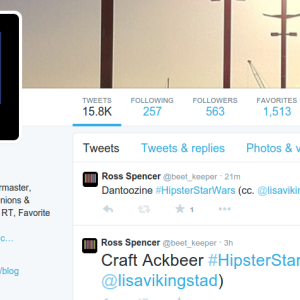
A screenshot of my Twitter banner showing my newly created heritage avatars, created dynamically for Twitter and using binary numbers to represent the day of the month.

Dynamic avatars on Twitter

The visualization tells me that the first publication from my Twitter bot, created to dynamically update my avatars daily was 20 December 2012. My bot was a simple Python script that generated images in binary to represent the day of the month.

Visual representation of the binary number 0b10100 indicating the 20th of the Month -- in this instance 20 December 2012
20 December 2020 via https://github.com/exponential-decay/binary-numbers/blob/334d417ad2fef1ac37e082e7d78f42412d176de3/binary-numbers-original-images/binary-numbers-original-images-all/20-12-2012.png

Why?

Well, doesn’t it get a little boring looking at the same thing every day?

Lets look at the details below.

Loading

Follow

Get every new post delivered to your Inbox

Join other followers: