The Painter Goblin becomes corporeal by having its prints converted from digital to canvas in real life. In this image, the Painter Goblin canvases arer bathed in sunlight provided by a west-facing window around sunset. The grid used to display the Painter Goblin in a salon style shadowed by the window frame onto the wall. The light in this image has been enhanced to increase its saturation to mirror the vibrancy of The Painter Goblin's original image.

The Painter Goblin: Becoming Corporeal

When you move country you have to be prepared to change quite a lot about your life. Back at the end of 2020, apart from literally everything else going on my partner and I also moved from Canada to Germany.

For me, this was my fifth or so international move (including shorter temporary stays) in as many years.

Being able to pick up sticks and move like that means living a drastically minimized life. Most of the things you have fit in a suitcase. Most of the things you have are small, and largely not overly whimsical. Sure, you can fit a few treasures into your bag, but you learn to value small ones, not things you might otherwise use to decorate an entire apartment!! 

So, what do you do when you do have an apartment to decorate?

You ask the best known painter in your family to conjure some magic, The Painter Goblin!

Loading

What I will miss about Twitter

People seem to be moving. You’ll find me on Mastodon and BlueSky.

As I happened to be looking through some 2015 archives today, I made notes of the things I will miss.

twitter walls twitter sentiment analysis twitter graphs twitter bots twitter history and its use for activism twitter history and its use for emergent trends twitter knowledge base and advance search twitter serendipity

The history books will be pretty unbelievable when they come to write about it. It may never come back, but it did exist. And it was fun, not until it lasted, because it lasted too long, but until it was no fun no more.

Loading

Color Theory: What’s the deal with the palettes I’m using?

Following a recent conversation, I wanted to write this blog to add some final pieces of context to my current interest in color palettes.

Binary Numbers

The Binary Numbers project was changed earlier this year following Trump’s inauguration. The original was inspired by simple musings on Data as Art. It was updated again in 2014 after the work had stalled due to technical reasons. I increased the complexity of the images, and incorporated Heritage Color Palettes.

But the end of last year and the beginning of this were exhausting. Two months were spent in protest:

But it seems that this alone was not able to tear the wheels off a tanker in Tienanmen Square… and so I decided on something uplifting. For myself, and for the viewer.

Cinema Palettes was a fantastic Twitter account that takes a scene (not necessarily iconic) from a film and analyses the scene’s colors, presenting back to us, the palette used.

I had been following it for a while and I became curious as to what I might be able to do with it in the configuration of my Binary Numbers.

And so from January this year I adapted the Cinema Palettes concept into this work starting with 50 new color palettes.

Loading

Two Cats, by John Singer Sargant and remixed by The Painter Goblin. The original can be seen at The Metropolitan Museum in New York

The Painter Goblin Visits The Met’s Top Ten

Inspired by a Creative Commons (CC) blog the Painter Goblin decided to tackle the top-ten visual artworks at The Met Museum (July 2017).

The blog discusses how folks are using CC search to find works held at The Met. The Painter Goblin has been using Wikidata to similar effect – an exploration – a technique grounded in happenstance to discover and understand art held in the fantastic list of institutions that make it available on the Wikidata/Wikimedia service. With little exception, The Painter Goblin cannot replace the original works but hopes that visually interesting/stunning remixes when they appear inspire others to indulge in their own discovery and works of creation.

Let’s see what our elusive basement goblin did with the top-ten listed above…

Loading

Salvador Dali, Set for 'Bacchanale'

The Painter Goblin: Part 5, And Finally…

The work on the Painter Goblin is almost complete for now. The automation of their work is pretty much ironed out with regular tweets happening every night.

A recent favorite:

Maria Krzymuska
Wikidata: https://www.wikidata.org/wiki/Q28727544

I just wanted to round off this series of blogs with some remaining thoughts.

Loading

Starry Night

The Painter Goblin: Part 4, Putting it all together…

Following the previous posts, bringing this all together meant three different applications.

  • paintergoblin.py – creates the images, can be run standalone
  • wikigoblin.py – retrieves data to tweet from the Wikidata SPARQL services
  • twittergoblin.py – tweets for us! Either a random Wikidata image or from am existing Wikidata link

We create Tweetable information using the wikigoblin. We perform the Tweet using twittergoblin. In between the paintergoblin has to create his art!

We’ve seen examples of the images from the original zine.

Persistence of Memory

How do we turn this concept into something real, and automated?

Loading

The Painter Goblin: Part 3, Data Sources

One thing that held the Painter Goblin project back was finding a data source to get images from.

There are potentially hundreds of sources out there, but! The path of least resistance means that:

  • Any source needs either hackable URIs** (uniform resource identifier) or a randomizing function.
  • Ideally, a data source doesn’t link to yet-another-page, e.g. portal like websites to other’s collections.
  • Ideally the data source links directly to an image to download.
  • Data can be easily selected by category, e.g. just paintings, or posters, not just ‘art’.

** A hackable URI is a URI pattern that can be cycled through using computational techniques, even if the underlying data isn’t entirely well-known. E,g, http://example.com/image/0001, http://example.com/image/0002, for subsequent pages, for lack of a more concrete example.

I wanted to explore heritage sources such as Europeana, TROVE, DPLA. I struggled to search these effectively though, and struggled to see how I might automate using them. I recognise they have APIs. I’ll revisit them in the future as I look to expand the Painter Goblin’s corpus.

Enter Wikidata.

Loading

The Painter Goblin

The Painter Goblin: Part 1, The Zine

I wrote a new Twitter bot two weekends back: The Painter Goblin.

The Painter Goblin was inspired by a Zine I wrote in a different time, in 2015 for the Christchurch Zine festival, New Zealand.

The Zine itself was inspired by a story I had heard a few weeks earlier from someone who had seen this story on Reddit:

Every time I play the Sims, I start my family with a ‘painting goblin’.

I make him/her morbidly obese with green skin. I make sure to give him the following traits:

  • Likes to be alone
  • Lives art
  • Hates the outdoors

The first thing I do once I have enough money, is build a small room in the basement, send him down there, and then remove the stairs. I set him up in a tiny little area with only an easel, a toilet, a refrigerator, a bed, a shower, and a trash bin.

All he does all day is paint. That’s it. He paints and paints and paints.

Eventually his paintings become very good and worth a lot of money. Every few minutes I go downstairs and sell whatever painting he has finished and then I return to playing the game.

My family always ends up feeling blessed because of their fortune, and they never find out about the horrible secret living beneath their home.

Lets take a look in more detail below.

Loading

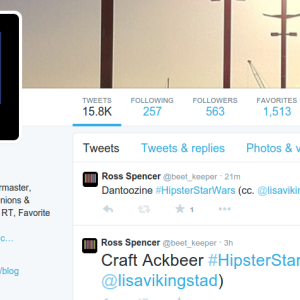
A screenshot of my Twitter banner showing my newly created heritage avatars, created dynamically for Twitter and using binary numbers to represent the day of the month.

Dynamic avatars on Twitter

The visualization tells me that the first publication from my Twitter bot, created to dynamically update my avatars daily was 20 December 2012. My bot was a simple Python script that generated images in binary to represent the day of the month.

Visual representation of the binary number 0b10100 indicating the 20th of the Month -- in this instance 20 December 2012
20 December 2020 via https://github.com/exponential-decay/binary-numbers/blob/334d417ad2fef1ac37e082e7d78f42412d176de3/binary-numbers-original-images/binary-numbers-original-images-all/20-12-2012.png

Why?

Well, doesn’t it get a little boring looking at the same thing every day?

Lets look at the details below.

Loading

Follow

Get every new post delivered to your Inbox

Join other followers: